Synchronizing Slot Reel Patterns with Live Dealer Payout Timings Across Gaming Platforms
Written by Kai Walter · Oct 16, 2026

Synchronizing Slot Reel Patterns with Live Dealer Payout Timings Across Gaming Platforms
Operators and platform developers coordinate slot reel cycle patterns with live table payout windows to maintain consistent session flow across desktop, mobile and tablet environments, and data from industry reports shows these alignments affect player retention metrics in measurable ways. Reel cycles in modern slots operate on pseudo-random number generators that complete full rotations at set intervals, while live dealer tables release payouts based on real-time game resolutions that occur at irregular intervals depending on dealer speed and table traffic.
Platform Integration Mechanics
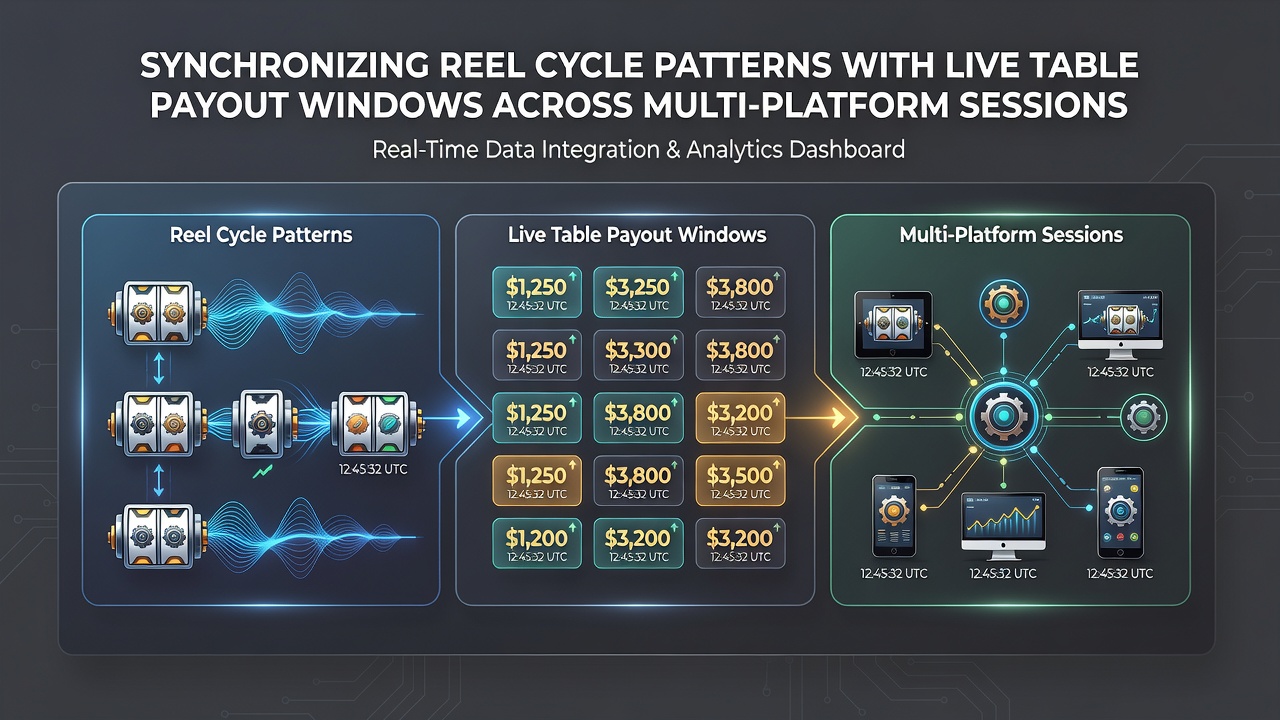
Multi-platform sessions require backend systems to map reel completion timestamps to live table result windows so that bonus triggers or side bets activate without latency mismatches, and software providers achieve this through API handshakes that sync session clocks every few milliseconds. One study released by a North American gaming research group found that platforms using unified timing protocols reduced session drop-off rates by measurable percentages compared to unsynced environments.
Developers embed cycle pattern trackers that monitor reel stop positions and cross-reference them against live stream metadata feeds from tables, which allows payout windows to open precisely when reel sequences reach predetermined alignment points. This approach proves especially relevant in October 2026 when several regional operators plan to roll out expanded cross-device features that link progressive reel mechanics directly to live baccarat and blackjack resolution cycles.
Timing Protocols and Data Handling
Timing protocols rely on centralized servers that broadcast unified timestamps to all connected devices, and these servers adjust for network jitter by inserting small buffer periods that prevent reel cycles from advancing ahead of live table results. Figures from an Australian regulatory technology review indicate that buffer calibration reduces desync events by up to 40 percent in high-volume multi-platform environments.
Live table payout windows function as fixed-duration intervals after each hand or spin resolves, and reel cycles must reach their natural stopping points within those windows to trigger combined bonuses or shared jackpots. Observers note that systems employing predictive cycle modeling anticipate the next reel stop sequence and pre-load payout scripts, which keeps sessions seamless even when players switch between a mobile app and a desktop browser mid-round.
Regional Implementation Examples
European operators have tested reel-to-table synchronization modules that pull payout window data from centralized live game servers while simultaneously tracking individual reel cycle lengths on player devices, and similar projects appear in Canadian provincial gaming frameworks where cross-platform compliance reporting now includes timing accuracy metrics. A research paper from a European technical university outlined how these modules use machine learning to forecast payout window openings based on historical dealer pace data.
Session logs from integrated platforms reveal that players who maintain continuous play across devices experience fewer interruptions when reel cycles and live payouts align within a 200-millisecond tolerance band. Industry associations tracking these developments report that adoption rates climbed steadily through 2025 and show no signs of slowing as more operators integrate live and digital elements.
Technical Considerations for Operators
Operators must calibrate reel cycle speeds against average live table resolution times to avoid situations where a slot finishes its cycle before a table hand concludes or after the payout window closes. Calibration involves adjusting reel animation durations and live stream buffer lengths while maintaining regulatory requirements for randomness and transparency across all connected platforms.
Those managing large-scale deployments often deploy monitoring dashboards that flag timing drift in real time, allowing technicians to adjust clock offsets before players notice discrepancies. Data from a U.S.-based gaming technology consortium shows that proactive drift correction maintains session continuity across thousands of concurrent multi-platform users without manual intervention in most cases.
Future Developments
Upcoming platform updates scheduled for late 2026 aim to expand synchronization capabilities by incorporating player-specific cycle preferences that adapt reel speeds to individual live table viewing habits. These updates build on existing frameworks that already link reel patterns to payout windows, and early test results suggest further reductions in cross-device transition friction.
Conclusion
Coordinating reel cycle patterns with live table payout windows across multiple platforms requires precise timing infrastructure, continuous monitoring, and adaptive protocols that respond to network conditions and dealer pacing. Reports from diverse regulatory and research bodies confirm that effective synchronization supports stable session metrics and reduces technical interruptions for players moving between devices. As operators prepare additional features ahead of October 2026 rollouts, the emphasis remains on maintaining alignment accuracy while complying with regional technical standards that govern both digital reels and live dealer operations.